
How IUI Works: The Step-by-Step Process Explained
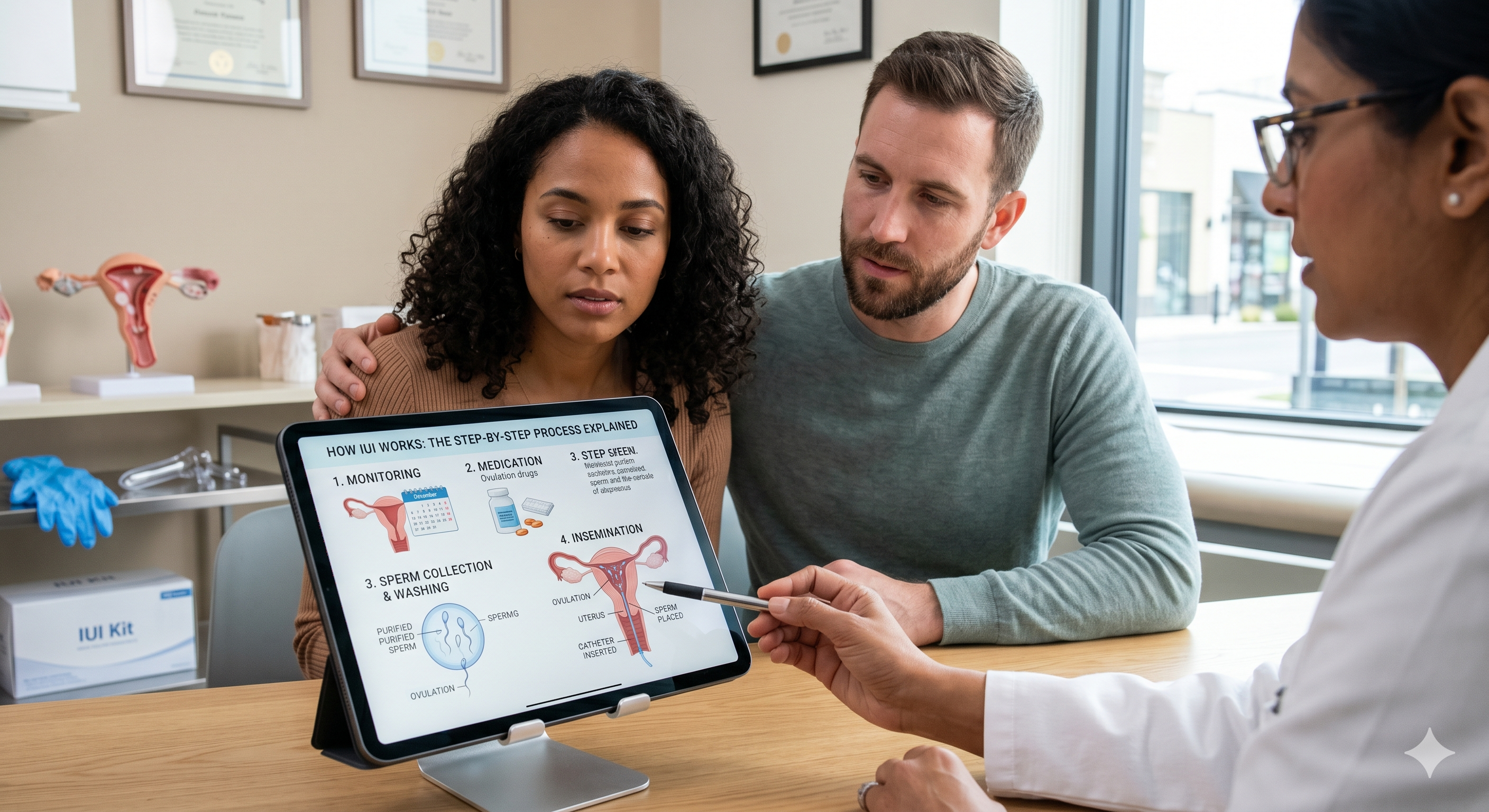
Intrauterine insemination, also known as IUI, is an artificial insemination or a reproductive procedure that helps a couple bear a child artificially after they have failed to conceive naturally. Under this step, a healthy sperm is implanted directly into the uterus of the woman, which helps increase its proximity to the fallopian tubes. The doctor injects sperm cells directly into the uterus when a female is ovulating during this procedure. Consequently, fertilizing eggs becomes easy and takes less time.
IUI is a non-complex, low-tech procedure that has become highly common among couples worldwide. It raises your chances of getting pregnant, thus offering the happiness you have been long waiting for.
Who Needs IUI?
Owing to the advancements in medical science, women unable to conceive earlier for one reason or another can easily do so. IUI is an effective procedure for the following individuals:
- Women who are unable to ovulate due to PCOS or hypothalamic conditions.
- Women who suffer from unexplained fertility.
- Male partners with minor semen abnormalities.
- Male partners with ejaculatory dysfunction.
- Male partners who have frozen their sperm before surgery, travel, or treatment of any disease.
- Any individual who needs donor sperm, including LGBTQ couples and heterosexual couples, is struggling with male factors.
- Single women looking to conceive.
What is the Step-by-Step Process Involved in IUI Procedure?
The doctor checks your body for any pre-existing health conditions and other abnormalities. If you are a suitable candidate for IUI, you will be given medication to induce ovulation. Here is the step-by-step procedure of how a female is impregnated following this method.
Step 1 – Egg Growth Stimulation
You will be given some oral or injectable medicines to encourage the development and maturity of the eggs. Depending on the response of ovaries, these injectable drugs will be given for 8-12 days, whereas oral medications will be administered continuously for 5 days.
Step 2 – Ultrasound & Blood Test
Your doctor will conduct quick ultrasound sessions every 2-3 days to monitor ovaries and egg growth while taking injectable medicines. Blood tests are also conducted to check the levels of hormones influencing ovarian and egg development.
Step 3 – Induction of Ovulation
You will be administered a trigger injection after your egg is ready for the process. This step prompts ovulation in 36 hours.
Step 4 – Processing Sperm Sample
The lab processes sperm samples from the male partner or donor sperm that have been thawed. The sample is washed during the preparation to remove immobile sperm count, seminal fluid, debris, and other unwanted things that may lead to pain and cramps. After washing, these cells are condensed into tiny amounts.
Step 5 – Insemination Procedure
The doctor uses a short, flexible, and thin catheter to inject the sperm sample into the uterus. It takes a few seconds to finish this process. The entire procedure is painless. It may be recommended that you inseminate twice in a row in some cases. However, in most cases, each cycle requires only one well-managed insemination process.
Step 6 – Follow up
Your progesterone levels are commonly evaluated weekly following evaluation. If required, the doctor may suggest extra hormone assistance to aid with uterine lining preparation for surgery.
What is the Success Rate of IUI?
The success rate of IUI can be determined by several factors, including the reason for fertility, the age of the partners, the use of fertility drugs, the existence of any underlying health condition, and more. For a couple that undergoes the procedure every month, the success rate is high. As per research, the success rate of IUI ranges around 8.7%. It means you may or may not benefit from this procedure. In the end, the success rate varies from person to person.
Are There Any Risks Involved with IUI?
If a female is put on fertility medications while undergoing IUI, the chances of getting pregnant with twins, triplets, and multiple births are higher. However, there are some risks with this procedure, including premature birth. There is additional risk of infection.
While IUI is a sought-after procedure, it also includes some side effects. But do not worry, for these negative effects are mild and subside with time. The common side effects include the following:
- Ovarian hyperstimulation syndrome or OHSS
- Swollen and painful ovaries
- Breast tenderness
- Pelvic discomfort
- Bloating
- Ovarian cysts
- Swelling around the injection site
- Rash around the injection site.
How to Attain Success with the IUI Procedure?
Here are some tips to increase the chances of IUI success:
- Try hormone stimulation therapy.
- Ensure that the sperm used in the procedure is washed thoroughly and not used more than an hour after washing.
- Keep your diet in check, as eating healthy would make your sperm healthy.
- Exercise regularly to avoid health issues, such as PCOD or PCOS.
Takeaway
Intrauterine insemination has become an effective procedure with fewer risks and high success rates. The procedure involves its own pros and cons. Ensure understanding of the pros and cons of this procedure and make an informed decision.
Frequently Asked Questions
What is IUI and how does it differ from IVF?
IUI (Intrauterine Insemination) is a fertility procedure where washed and concentrated sperm is placed directly into the uterus during ovulation. Unlike IVF, which involves retrieving eggs and fertilizing them in a lab before transferring embryos, IUI is less invasive, more affordable, and allows fertilization to occur naturally inside the body.
How long does the IUI procedure take?
The insemination procedure itself takes only a few seconds to a couple of minutes. However, the entire IUI cycle, including ovarian stimulation, monitoring through ultrasounds and blood tests, and the insemination, spans approximately 10 to 14 days from the start of medication to the procedure day.
Is the IUI procedure painful?
The IUI procedure is generally painless. A thin, flexible catheter is used to insert the sperm into the uterus, which most women describe as similar to a routine pap smear. Some women may experience mild cramping during or after the procedure, but it typically subsides quickly.
What is the success rate of IUI treatment?
The success rate of IUI varies depending on factors such as the cause of infertility, age of the partners, use of fertility medications, and overall health. On average, the success rate per cycle is around 8 to 15 percent. Couples who undergo multiple cycles generally have higher cumulative success rates.
Who is a good candidate for IUI?
IUI is recommended for women with ovulation disorders such as PCOS, couples with unexplained infertility, male partners with mild semen abnormalities or ejaculatory dysfunction, individuals using donor sperm including single women and LGBTQ couples, and partners who have frozen sperm prior to medical treatment or travel.