
IVF vs IUI: Which Fertility Treatment Is Right for You?
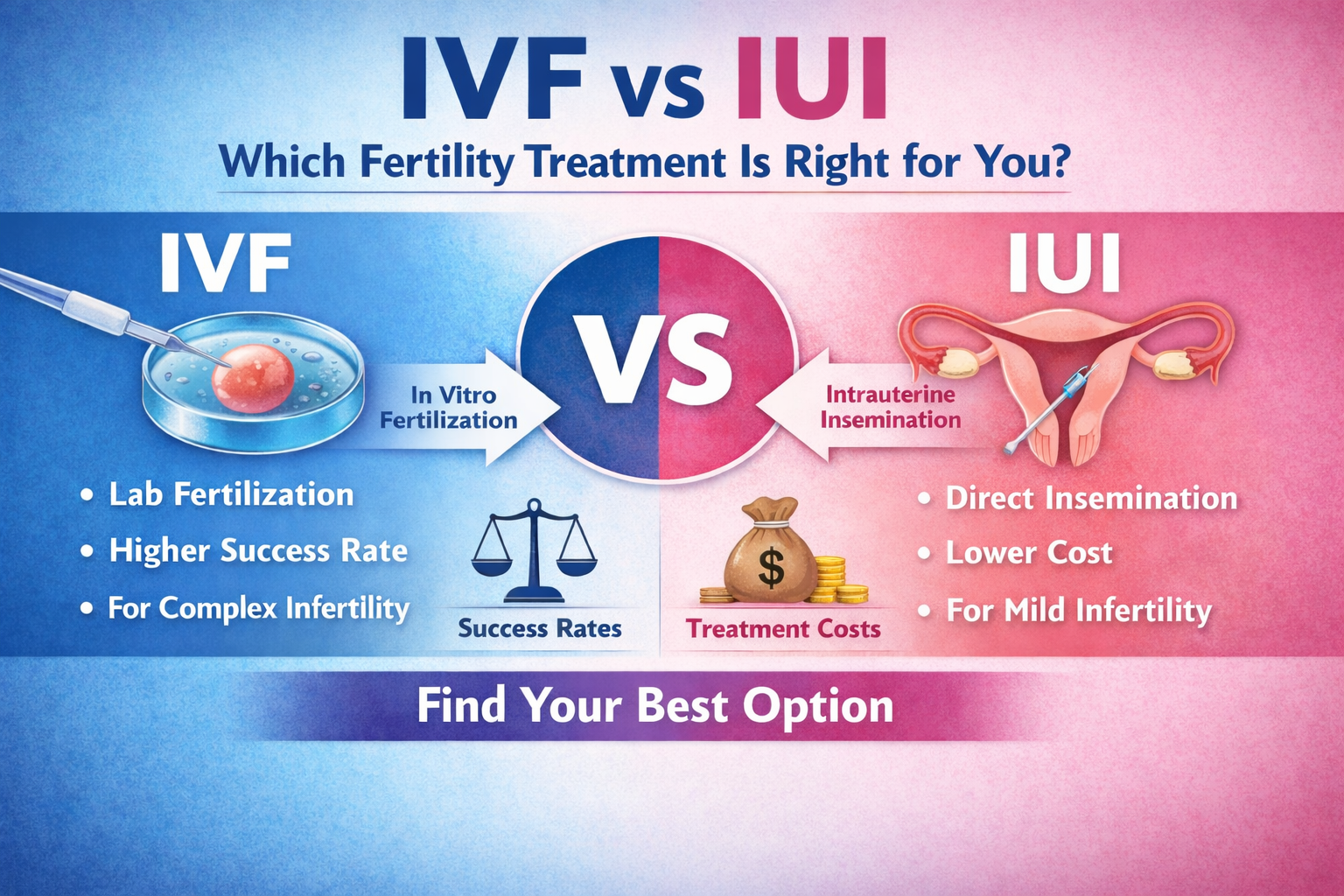
When you have been trying to conceive and things are not happening as expected, one of the first questions that comes up is whether you should go for IUI or IVF. Both are widely used fertility treatments, and both have helped many individuals and couples move closer to parenthood. Still, they are not the same, and choosing between them depends on your fertility history, age, diagnosis, timeline, and overall treatment goals.
At Myra IVF Centre, we understand that this decision can feel overwhelming at first. Many patients come in unsure about which treatment is better, more effective, more affordable, or more suitable for their specific fertility condition. The truth is that there is no one-size-fits-all answer. The right option depends on what your body needs, what the test results show, and what gives you the best chance of a healthy pregnancy.
This guide will help you understand the difference between IVF and IUI in a simple and practical way. We will cover how each treatment works, who it is best suited for, success rates, costs, benefits, limitations, and the key factors that can help you make the right choice with confidence.
What Are Your Fertility Treatment Options?
Fertility treatment is designed to support conception when pregnancy is not happening naturally or when medical conditions make conception more difficult. Some patients need mild support to improve the chances of fertilization, while others need advanced reproductive treatment that involves egg retrieval, embryo development, and embryo transfer.
IUI and IVF are two of the most commonly recommended assisted fertility treatments. IUI is usually considered a simpler and less invasive option, while IVF is a more advanced treatment that gives doctors more control over the fertilization process.
Understanding how these two options differ is the first step in choosing the one that aligns with your reproductive health and treatment plan.
What Is IUI?
IUI stands for intrauterine insemination. It is a fertility treatment in which specially prepared sperm is placed directly into the uterus around the time of ovulation. The goal is to help sperm reach the egg more easily and improve the chance of fertilization.
In natural conception, sperm must travel through the cervix and into the uterus before reaching the fallopian tube where fertilization takes place. IUI shortens this journey by placing healthy, concentrated sperm directly inside the uterus at the right time.
IUI is generally considered one of the less invasive fertility treatments. It is often recommended as an early treatment option for patients with mild fertility issues or unexplained infertility.
How the IUI Process Works
The IUI process usually begins with ovulation tracking. In some cases, fertility medication may be used to encourage egg development and improve the timing of ovulation. Ultrasound scans and hormone monitoring may be used to determine the best time for the procedure.
Once ovulation is near, a semen sample is collected and processed in the laboratory. This process is called sperm washing. It helps remove impurities and concentrate the healthiest, most motile sperm.
During the IUI procedure, the prepared sperm is inserted into the uterus using a thin flexible catheter. The procedure is usually quick, does not require anesthesia, and most patients can return to their routine the same day.
After insemination, fertilization still happens naturally inside the body, typically in the fallopian tube.
What Is IVF?
IVF stands for in vitro fertilization. It is a more advanced assisted reproductive treatment in which eggs are collected from the ovaries, fertilized with sperm in a laboratory, and the resulting embryo is later transferred into the uterus.
Unlike IUI, where fertilization happens inside the body, IVF allows fertilization to happen in a controlled laboratory environment. This gives fertility specialists more control over the process and is one of the reasons IVF is often recommended for more complex fertility conditions.
IVF is commonly used when other fertility treatments have not worked or when there are known medical factors that reduce the chances of conception through less invasive methods.
How the IVF Process Works
The IVF process starts with ovarian stimulation. Fertility medications are used to help the ovaries produce multiple mature eggs instead of the single egg released during a natural cycle.
During this phase, patients are monitored closely with ultrasound scans and blood tests to assess follicle growth and hormone levels. Once the eggs are ready, a trigger injection is given, and egg retrieval is scheduled.
Egg retrieval is a minor procedure performed under sedation. The eggs are collected from the ovaries using ultrasound guidance. On the same day, sperm is collected and prepared for fertilization.
In the lab, the eggs are fertilized either through standard IVF or ICSI, depending on sperm quality and treatment needs. The resulting embryos are observed for development, and the healthiest embryo or embryos are selected for transfer into the uterus.
After embryo transfer, hormonal support is given, and a pregnancy test is done around two weeks later to check whether implantation has occurred.
What Is the Main Difference Between IVF and IUI?
The biggest difference between IVF and IUI is where fertilization happens. In IUI, fertilization takes place naturally inside the body after sperm is placed in the uterus. In IVF, fertilization happens in the lab before the embryo is placed into the uterus.
IUI is simpler, faster, and less invasive. IVF is more advanced, more closely monitored, and usually has higher success rates, especially in patients with more serious fertility concerns.
Because the processes are different, they also differ in terms of cost, medical involvement, emotional commitment, and the type of fertility problems they are best suited to treat.
How Do IVF and IUI Compare Side by Side?
- IUI is less invasive, while IVF involves egg retrieval and embryo transfer
- IUI is generally more affordable, while IVF is more expensive
- IUI is often used for mild fertility issues, while IVF is recommended for moderate to complex fertility challenges
- IUI success rates are lower per cycle, while IVF success rates are higher per cycle
- IUI involves fertilization inside the body, while IVF involves fertilization in the lab
- IUI requires less medication, while IVF requires a more structured medication protocol
Who Is IUI Usually Recommended For?
IUI is often recommended when fertility problems are mild or when no major cause of infertility has been found. It may be used as a first step before moving to more advanced treatment, especially in younger patients with a shorter duration of infertility.
IUI may be suitable for the following situations:
- Mild male factor infertility
- Unexplained infertility
- Ovulation-related issues
- Cervical mucus problems
- Couples using donor sperm
- Patients who want a less invasive and lower-cost starting option
IUI is usually most effective when the fallopian tubes are open, ovulation is happening or can be supported, and sperm quality is reasonably healthy.
Who Is IVF Usually Recommended For?
IVF is usually recommended when fertility issues are more complex, when IUI has failed, or when there are medical conditions that make natural fertilization less likely. Since IVF bypasses some of the barriers that affect conception, it offers a stronger treatment pathway for many patients.
IVF may be recommended in the following cases:
- Blocked or damaged fallopian tubes
- Severe male factor infertility
- Advanced maternal age
- Endometriosis
- Low ovarian reserve
- Repeated failed IUI cycles
- Need for genetic testing before pregnancy
- Unexplained infertility that has not responded to simpler treatments
IVF may also be advised when time is an important factor and there is a need to maximize the chance of pregnancy in the shortest possible time.
IVF vs IUI Success Rates
Success rates are one of the most important considerations when comparing fertility treatments. In general, IVF has a higher success rate per cycle than IUI, but success in either treatment depends on age, egg quality, sperm health, uterine condition, diagnosis, and the overall treatment plan.
IUI Success Rates
IUI success rates are usually lower per cycle because fertilization still depends on natural processes inside the body. It may take more than one cycle to achieve pregnancy. IUI tends to work better in younger patients and in cases where infertility is mild.
IVF Success Rates
IVF generally offers higher success rates per cycle because fertilization and embryo development are closely managed in the lab. Doctors can also assess embryo quality before transfer, which helps improve the chances of implantation.
While IVF has higher success rates overall, it does not guarantee pregnancy. The best treatment choice is not just about which one has the highest numbers, but which one matches your condition and gives you the most realistic chance of success.
How Much Does IVF Cost Compared to IUI?
Cost is another important factor for many patients. IUI is typically less expensive because it is a simpler procedure with fewer medications and less laboratory involvement. IVF is more expensive because it includes ovarian stimulation, monitoring, egg retrieval, fertilization, embryo culture, and embryo transfer.
However, lower cost does not always mean better value in the long run. If several IUI cycles are needed without success, the total cost can add up over time. In some cases, starting IVF earlier may be more efficient, especially if the underlying fertility issue makes IUI less likely to work.
At Myra IVF Centre, treatment recommendations are based on what is medically appropriate and financially practical for the patient, with a focus on transparency and long-term results.
Which Treatment Is Less Invasive?
IUI is less invasive than IVF. It does not require egg retrieval, anesthesia, or embryo handling in the laboratory. The procedure is simple, quick, and usually completed in the outpatient setting.
IVF is more involved. It requires injections, repeated monitoring, an egg retrieval procedure, lab fertilization, and embryo transfer. Even though it is a safe and commonly performed treatment, it does demand more medical intervention and emotional preparation.
For some patients, starting with the less invasive option feels more comfortable. For others, moving directly to IVF may make more sense based on fertility history and age.
How Age Affects the Choice Between IVF and IUI
Age plays a major role in fertility treatment decisions. As female age increases, both egg quantity and egg quality decline. This directly affects natural conception as well as the success of assisted fertility treatments.
In younger patients with good ovarian reserve and no serious fertility diagnosis, IUI may be a reasonable first-line option. But for patients over 35, especially those with low ovarian reserve or a longer history of infertility, IVF is often recommended sooner because it offers a better chance of pregnancy in less time.
Age does not automatically rule out IUI, but it does influence how aggressive or time-sensitive the treatment plan should be.
IVF vs IUI for Male Factor Infertility
Male factor infertility can range from mild to severe. In mild cases, IUI may help by placing healthy washed sperm directly into the uterus. But when sperm count, motility, or morphology is significantly affected, IVF is usually the better option.
With IVF, and especially with ICSI, a single healthy sperm can be selected and injected directly into the egg. This is extremely helpful in cases where sperm may not be able to fertilize the egg on its own.
If semen analysis shows serious sperm-related concerns, IVF often provides a more effective path than repeated IUI attempts.
IVF vs IUI for Unexplained Infertility
Unexplained infertility means that routine fertility tests do not show a clear cause, even though pregnancy has not happened. In these cases, both IUI and IVF may be considered depending on age, treatment history, and how long the couple has been trying to conceive.
IUI is often tried first in younger couples with unexplained infertility, especially when test results are otherwise normal. If IUI cycles do not lead to pregnancy, IVF may be the next recommended step.
IVF can also help uncover issues that are not always visible in standard testing, such as fertilization problems or poor embryo development.
IVF vs IUI for PCOS
Patients with polycystic ovary syndrome often struggle with irregular ovulation, which can make conception more difficult. In many PCOS cases, treatment starts with ovulation induction and timed intercourse or IUI.
If those approaches do not work, IVF may be recommended. IVF can provide more controlled ovarian stimulation and better monitoring, although patients with PCOS do need careful management to reduce the risk of ovarian hyperstimulation.
The right choice depends on how the patient responds to medication, whether ovulation can be successfully managed, and whether there are any other fertility factors involved.
How Many IUI Cycles Should You Try Before IVF?
There is no universal number that applies to everyone, but many doctors recommend trying around three cycles of IUI before considering IVF, especially if the patient is young and the diagnosis is mild.
If pregnancy has not happened after several well-timed IUI cycles, it may be a sign that IVF is the better next step. In some cases, patients may be advised to skip IUI completely and move straight to IVF, especially if they are older, have low ovarian reserve, severe male factor infertility, blocked tubes, or prior treatment failures.
The decision should always be based on individual fertility assessment rather than following a standard sequence without considering the real cause of infertility.
How Do IVF and IUI Differ Emotionally?
Both treatments can be emotionally difficult in different ways. IUI may seem easier physically, but multiple failed cycles can still be frustrating and emotionally draining. IVF is more intensive from the start and often comes with higher expectations, which can create stress and pressure.
Many patients also feel emotionally burdened by the waiting periods, medication schedules, uncertainty, and repeated testing. This is why emotional support is an important part of fertility care, regardless of the treatment chosen.
At Myra IVF Centre, we believe fertility treatment should support both physical and emotional well-being, so patients feel informed, cared for, and reassured at every stage.
What Are the Advantages of IUI?
- Less invasive treatment process
- Lower cost compared to IVF
- Quick procedure with minimal recovery time
- Can be a good first-step treatment for mild infertility
- Usually requires fewer medications
What Are the Limitations of IUI?
- Lower success rates per cycle
- Not suitable for blocked tubes or severe sperm issues
- May require multiple cycles
- Fertilization still depends on natural processes
What Are the Advantages of IVF?
- Higher success rates per cycle
- Suitable for a wider range of fertility conditions
- Offers better control over fertilization and embryo development
- Can be combined with ICSI, embryo freezing, and genetic testing
- Helpful when time is limited or when other treatments have failed
What Are the Limitations of IVF?
- More expensive than IUI
- Requires injections, monitoring, and egg retrieval
- Can be physically and emotionally demanding
- Does not guarantee pregnancy
What Questions Should You Ask Before Choosing IVF or IUI?
Before starting treatment, it helps to ask clear questions so you understand why a particular option is being recommended. Some of the most useful questions include:
- What is the exact cause of our fertility issue?
- Are the fallopian tubes open?
- Is ovulation regular?
- What does the semen analysis show?
- What are the realistic success chances for IUI in our case?
- Would IVF improve our chances significantly?
- How much time do we have based on age and ovarian reserve?
- What is the emotional and financial commitment for each option?
These questions can make treatment planning feel more practical and less overwhelming.
How Do Doctors Decide Whether IVF or IUI Is Right for You?
Fertility specialists do not choose treatment randomly. The decision is based on a combination of diagnostic findings, patient age, previous pregnancy history, treatment attempts, ovarian reserve, sperm health, and the overall likelihood of success with each method.
At Myra IVF Centre, every treatment plan begins with a detailed evaluation. This may include hormone testing, ultrasound scans, ovarian reserve assessment, semen analysis, and review of past medical or fertility history. The goal is to recommend the treatment that fits your body and gives you a meaningful chance of success.
Sometimes the right answer is to begin with IUI. Other times, IVF is clearly the more effective choice from the start.
Frequently Asked Questions About IVF vs IUI
Is IVF better than IUI?
IVF is not automatically better for everyone, but it does offer higher success rates and is more suitable for complex fertility issues. IUI may still be the right first option for patients with mild infertility.
Is IUI more natural than IVF?
IUI is often considered closer to natural conception because fertilization happens inside the body. IVF is more medically controlled because fertilization happens in the lab.
Can I get pregnant on the first IUI cycle?
Yes, pregnancy can happen in the first IUI cycle, but success depends on age, timing, sperm quality, ovulation, and the reason for infertility.
Can IVF work after failed IUI?
Yes, many patients who do not conceive with IUI go on to achieve pregnancy through IVF. IVF is commonly recommended after repeated unsuccessful IUI cycles.
Which treatment is more affordable?
IUI is usually more affordable per cycle. IVF costs more because it includes more steps, medications, and laboratory procedures.
Is IVF painful?
IVF can involve some discomfort due to injections, monitoring, and egg retrieval, but the process is generally well managed with medical support and sedation where needed.
Can I skip IUI and go straight to IVF?
Yes. In many cases, going directly to IVF is the better option, especially when there are blocked tubes, severe male infertility, low ovarian reserve, advanced age, or previous failed treatments.