
Know Everything about IVF Treatment from its Process to the Success Rate
Each month after periods a woman has a 25% chance of getting pregnant naturally. But for some, luck needs a medical boost to get pregnant. When a couple has infertility problems, it is necessary to start with a specialist consultation by going to an obstetrician/gynaecologist specializing in infertility. In IVF treatment, there are several steps involved in determining if a couple is ready to begin. If all the signals are green, the specialist at IVF hospital in Mombasa prescribes a workup to assess the quality of the sperm and the condition of the uterus and the ovulation cycle. In in-vitro fertilization, the maximum number of mature eggs are collected and brought into contact with a large number of sperms to allow fertilization.
What is In Vitro Fertilization?
In Vitro Fertilization is a highly complex Assisted Fertilization treatment carried out in IVF clinics in Mombasa. It consists of the unionization of the egg with the spermatozoon in the laboratory – in vitro – to obtain embryos to be transferred to the maternal uterus to obtain a pregnancy.
Once received, the embryos will be kept in culture for 5 – 6 days, at the end of which one of these will be transferred to the uterus, while the others will be stored for the future.
In which cases is it indicated?
In Vitro Fertilization can be carried out with donor or spouse sperm and facilitates the fertilization process when there are causes that prevent its natural realization.
This treatment is indicated for:
- Women who have already performed several unsuccessful inseminations.
- Women with severe endometriosis, tubal disease, or low egg quality.
- Couples in which the man has low sperm quality (moderate or severe male factor).
Process of In Vitro Fertilization
IVF has two phases:
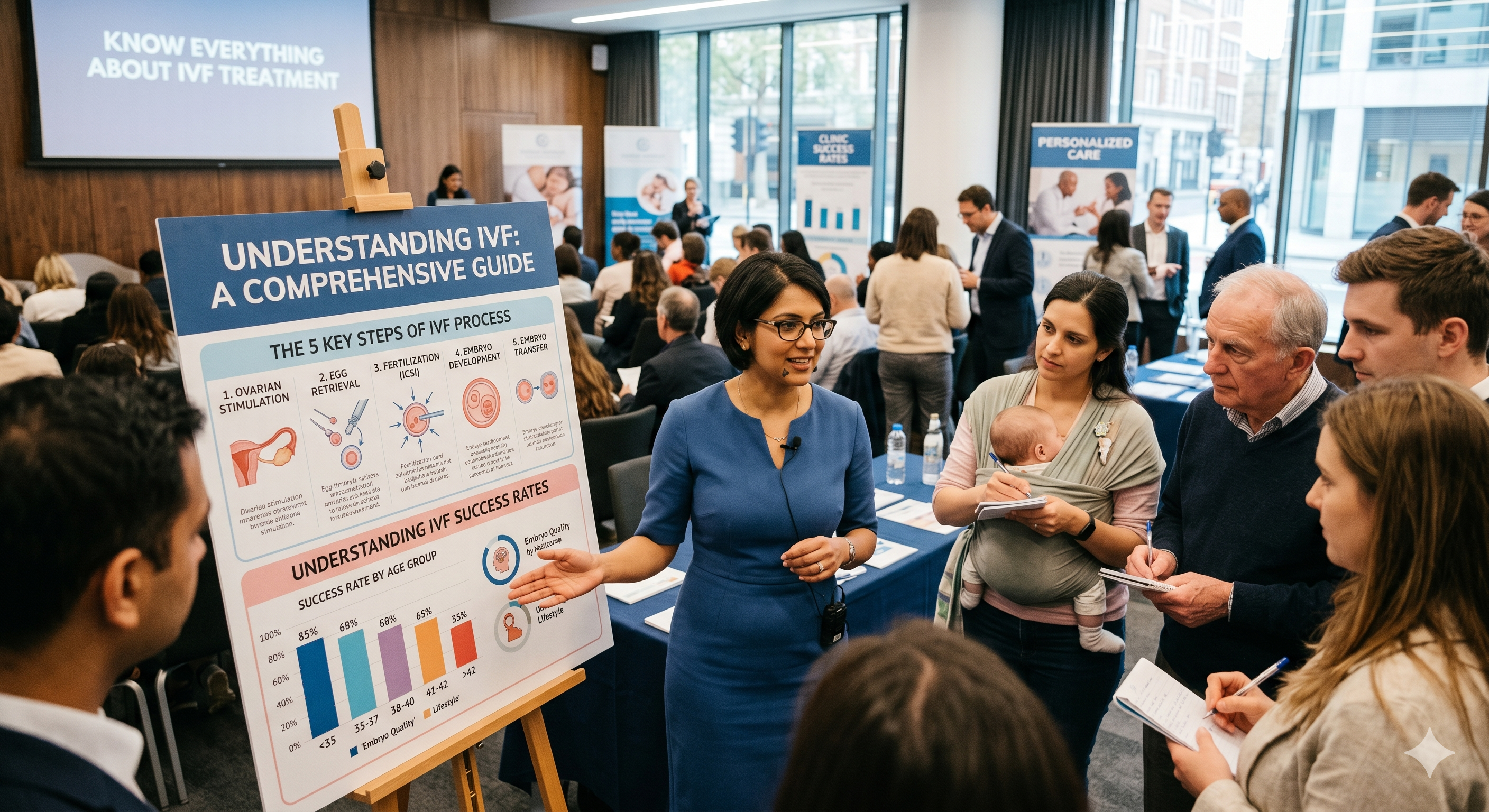
Phase 1: Hormonal Treatment (Ovarian Stimulation)
Ovarian production is stimulated by hormonal treatment to obtain a maximum of oocytes at once. The doctor at IVF Mombasa will then do two to three ultrasounds to monitor the size and maturation of the follicles in the ovary. As soon as the oocytes are mature, that is to say, ready to be fertilized, the injection of another hormone causes ovulation.
Phase 2: Oocyte Collection and Insemination in the Laboratory
Fertilizable oocytes are removed 36 hours later using a long, fine needle as part of a procedure that can be performed with brief general anesthesia at the patient’s request.
On the day of collection, the partner’s sperm is prepared in the laboratory; then, the oocytes are placed in the presence of spermatozoa and cultured in an incubator. Once one or more oocytes have been successfully fertilized and developed into embryos over the next few days, the doctor implants a two-day-old embryo into the woman’s uterine cavity through a catheter.
The result of the treatment is known two weeks after the oocyte retrieval. Blood tests can determine whether the woman’s body has accepted the pregnancy.
Factors Affecting the Success Rate of IVF
The chances of success depend primarily and in the first place on the woman’s age and her oocyte reserve. From 35 to 40 years of age, the prospects for success are reduced by half.
During the examination phase, various tests are carried out, which allow a relatively precise evaluation.
Conclusion
The chances of success depend primarily and in the first place on the woman’s age and her oocyte reserve. From 35 to 40 years of age, the prospects for success are reduced by half.
During the examination phase, various tests are carried out, which allow a relatively precise evaluation.
Frequently Asked Questions
What is the IVF treatment process?
The IVF treatment process involves two main phases. Phase 1 is hormonal treatment (ovarian stimulation), where medication stimulates the ovaries to produce multiple mature eggs. Phase 2 is oocyte collection and laboratory insemination, where the eggs are retrieved, fertilized with sperm in the lab, and the resulting embryo is transferred to the uterus. The entire cycle typically takes two to three weeks.
Who is a good candidate for IVF treatment?
IVF is recommended for women who have had several unsuccessful inseminations, those with severe endometriosis, tubal disease, or low egg quality, and couples where the man has moderate or severe low sperm quality. A fertility specialist will evaluate both partners to determine if IVF is the most suitable treatment option.
What is the success rate of IVF treatment?
IVF success rates depend primarily on the woman's age and her oocyte (egg) reserve. Women under 35 generally have higher success rates, while from 35 to 40 years of age, the prospects for success are reduced by approximately half. At Myra IVF Centre, we maintain a 79% success rate by using advanced techniques and personalized treatment plans.
How long does it take to know if IVF was successful?
The result of IVF treatment is typically known two weeks after the oocyte retrieval. A blood test is performed to measure hormone levels and determine whether the embryo has successfully implanted and the woman's body has accepted the pregnancy.
What happens to extra embryos after IVF?
After fertilization, embryos are kept in culture for 5 to 6 days. The best quality embryo is selected for transfer to the uterus, while any additional viable embryos can be cryopreserved (frozen) and stored for future use. This means patients may not need to go through the full stimulation and retrieval process again for subsequent attempts.