Understanding the IVF Process
In Vitro Fertilization (IVF) is a sophisticated medical procedure where a woman’s eggs are fertilized by sperm outside the body in a controlled laboratory environment. This IVF treatment in Kenya has become a primary solution for couples facing diverse fertility challenges, ranging from tubal factors and endometriosis to severe male-factor infertility. The IVF process typically spans approximately three to four weeks per cycle, involving meticulous hormonal management and expert embryological care.
With branches in Nairobi, Mombasa, and Kisumu, Myra IVF is recognized among the ivf centers in Kenya. Our high success rates are driven by a commitment to affordable care and the use of cutting-edge protocols. We empower parents with transparent IVF treatment options, ensuring that the dream of a biological child is accessible to more families across East Africa.
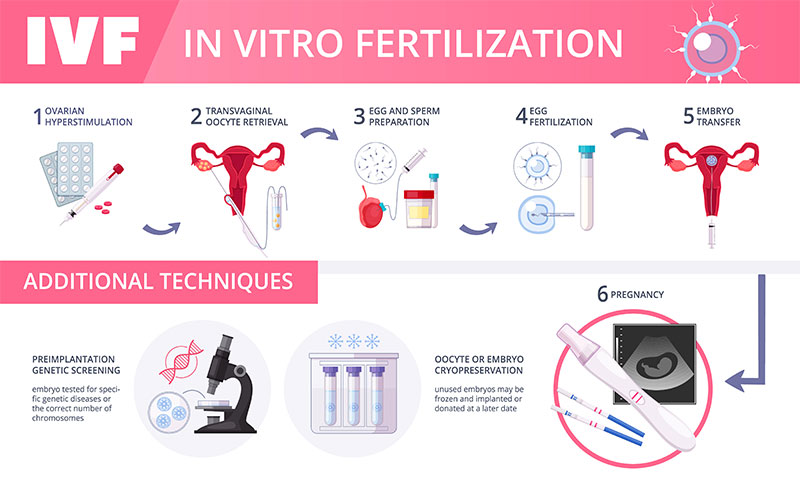
A Step-by-Step Guide to the IVF Process
1. Preliminary Testing & Ovarian Stimulation
Before beginning the cycle, we assess ovarian reserve and uterine health to ensure there are no underlying surgical needs. The active IVF process begins with 8-11 days of fertility medications designed to stimulate the ovaries to produce multiple mature follicles. Our specialists monitor this progress using advanced vaginal ultrasounds and hormonal blood panels to pinpoint the exact moment the eggs reach peak maturity.
2. Precise Egg Retrieval
Approximately 34-36 hours after a final "trigger shot," egg retrieval is performed. This is a quick, minimally invasive procedure conducted under light sedation to ensure it is completely painless. Using ultrasound guidance, a fine needle collects follicular fluid from the ovaries. Our embryologists then immediately identify and isolate the mature eggs under high-magnification microscopes.
3. Laboratory Fertilization (IVF or ICSI)
Once retrieved, mature eggs are fertilized with the partner’s or donor sperm. Depending on the sperm quality, we utilize either Conventional Insemination or Intracytoplasmic Sperm Injection (ICSI). In ICSI, a single healthy sperm is injected directly into each egg, a technique that significantly boosts fertilization rates in cases of low sperm count.
4. Embryo Culture and Grading
Fertilized eggs (embryos) are cultured in specialized incubators for 3 to 5 days. At Myra IVF, we favor Blastocyst Culture (Day 5), as this allows for natural selection of the most robust embryos. If genetic screening is required, a PGS/PGT-A biopsy is performed at this stage to ensure chromosomal health before transfer.
5. Embryo Transfer & Implantation
The safest and most viable embryo is selected for transfer. Using a soft, flexible catheter, our specialist places the embryo into the uterus under ultrasound guidance. This procedure is painless and requires no anesthesia. Any high-quality surplus embryos can be preserved through Embryo Freezing for future use.
6. Pregnancy Confirmation
Twelve days following the transfer, a blood test is performed to confirm pregnancy. Our team provides close clinical supervision during these early stages before transitioning your care to an obstetrician. As one of the ivf centers in Kenya, we take pride in supporting you through every emotional and physical milestone of this journey.
Why Myra IVF is the good Choice in Kenya
Choosing where to undergo IVF treatment in Kenya is a life-changing decision. Myra IVF stands out due to our highly trained specialists, ISO-certified laboratory standards, and a deep sense of compassion for our patients. Whether you are visiting our IVF clinic in Nairobi or our IVF center in Mombasa, you will receive the same level of global-standard care designed to maximize your chances of a healthy baby.
Frequently Asked Questions
What is IVF and how does it work?
IVF (In Vitro Fertilization) is a fertility treatment where eggs are retrieved from the ovaries and fertilized with sperm in a laboratory. The resulting embryos are cultured for 3 to 5 days and then transferred into the uterus. At Myra IVF Centre, our specialists guide you through every step, from ovarian stimulation to embryo transfer, using advanced lab technology to maximize success.
How much does IVF treatment cost in Kenya?
IVF treatment costs in Kenya vary depending on the protocol, medications, and any additional procedures like ICSI or PGS testing. Myra IVF Centre offers affordable IVF packages designed for patients across East Africa. Contact us at +254 786656236 for a personalized cost breakdown based on your specific needs.
What is the success rate of IVF at Myra IVF Centre?
Myra IVF Centre has achieved a 79% success rate across IVF cycles. Success depends on factors including maternal age, egg quality, sperm health, and underlying conditions. Patients under 35 generally have the highest success rates, though our specialists optimize protocols for every age group.
How many IVF cycles are typically needed to get pregnant?
Many patients conceive within one to three IVF cycles. The number depends on individual factors such as age, diagnosis, and embryo quality. Our fertility specialists evaluate your unique case to recommend whether a single cycle or multiple attempts offer the best path to pregnancy.
Is IVF treatment painful?
Most patients describe IVF as uncomfortable rather than painful. Ovarian stimulation involves daily injections, and egg retrieval is performed under sedation so you feel minimal discomfort. Embryo transfer is a quick, painless procedure similar to a Pap smear. Our team ensures your comfort throughout the entire process.