
Egg Freezing in Kenya: Best Age, Process, Cost & Success Rates
A woman is born with all the eggs she will ever have — and both the number and quality of those eggs decline steadily with age, especially after 35. Egg freezing (oocyte cryopreservation) is the modern answer to that biological clock: it lets you preserve your younger, healthier eggs today so they are available whenever you are ready to build your family.
Once considered experimental, egg freezing is now a routine, proven part of fertility care — and more Kenyan women than ever are choosing it. In this guide, the specialists at Myra IVF Centre, led by Dr. Sarita Sukhija, explain who should consider egg freezing, the best age to do it, the step-by-step process, real success rates, and what it costs in Kenya.
Quick Answer: Egg freezing is a 2–3 week process in which the ovaries are stimulated with hormone injections for 10–12 days, mature eggs are collected under sedation, and the eggs are frozen the same day by vitrification (ultra-rapid freezing) for long-term storage. The best time to freeze is before age 35, and most women aim to bank 15–20 mature eggs. With vitrification, 90–95% of eggs survive thawing, and eggs can be stored safely for many years without losing quality.
What Is Egg Freezing (Oocyte Cryopreservation)?
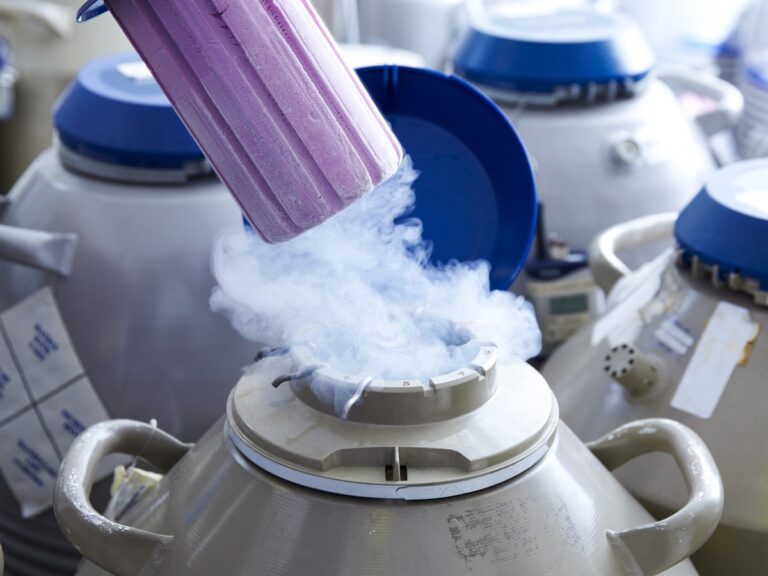
Egg freezing is a fertility preservation procedure in which a woman's mature eggs are collected, frozen unfertilised, and stored in liquid nitrogen at −196°C. At that temperature all biological activity stops, so the eggs remain exactly as they were on the day of freezing — a 32-year-old who freezes her eggs can use "32-year-old eggs" at 40.
The breakthrough that made this reliable is vitrification — an ultra-rapid freezing technique that turns the egg into a glass-like state without forming the ice crystals that damaged eggs under older slow-freezing methods. Vitrification is the same technology used in sperm and embryo freezing and is a core strength of our laboratory.
Who Should Consider Freezing Their Eggs?
Women choose egg freezing for many reasons — all of them valid:
- You want children later: career, education, finances or simply not having met the right partner yet. This is often called "social" or elective egg freezing, and it is the fastest-growing reason worldwide.
- Before medical treatment: chemotherapy, radiotherapy and some surgeries can permanently damage the ovaries. Freezing eggs before treatment protects your chance of a biological child.
- Conditions that threaten ovarian reserve: endometriosis, ovarian cysts requiring surgery, a family history of early menopause, or a low AMH / declining ovarian reserve result.
- During IVF for ethical or practical reasons: some couples prefer to freeze eggs rather than embryos.
What Is the Best Age to Freeze Your Eggs?
Age at freezing is the single biggest factor in whether your frozen eggs eventually become a baby. Here's the honest picture:
| Age at freezing | Egg quality | What it means |
|---|---|---|
| Under 30 | Excellent | Highest quality per egg, though many women this age never end up needing their frozen eggs |
| 30–34 | Very good | The "sweet spot" — strong egg quality combined with a realistic chance the eggs will be used |
| 35–38 | Good, declining | Still very worthwhile, but more eggs (often more than one cycle) are needed for the same chance |
| 39+ | Reduced | Possible after individual assessment; success per egg is lower, so realistic counselling matters |
The takeaway: the best age to freeze your eggs is before 35 — but the second-best time is now. Even at 36 or 38, eggs frozen today are younger than eggs collected two years from now.
The Egg Freezing Process: Step by Step
From your first scan to frozen eggs takes about two to three weeks — most women fit it around work with only two or three short clinic visits and one procedure day:
- Step 1 — Fertility assessment: an AMH blood test and antral follicle count ultrasound tell us your ovarian reserve and let us design your protocol and predict how many eggs to expect.
- Step 2 — Ovarian stimulation (10–12 days): daily hormone injections encourage the group of follicles your body recruited that month to grow together, instead of losing all but one naturally.
- Step 3 — Monitoring: two to three ultrasound scans and blood tests track follicle growth so doses can be adjusted and the trigger timed precisely.
- Step 4 — Trigger injection: when the follicles are ready, a final injection matures the eggs, and collection is scheduled about 36 hours later.
- Step 5 — Egg retrieval: a 20–30 minute procedure under sedation, done through the vagina with ultrasound guidance — no cuts or stitches. You go home the same day. (Read our detailed guide to what to expect during egg retrieval.)
- Step 6 — Vitrification and storage: the same day, our embryologists assess the eggs and freeze all mature ones by vitrification. They are stored in secure, continuously monitored liquid nitrogen tanks.
How Many Eggs Should You Freeze?
Not every egg becomes a baby — some won't survive the thaw, some won't fertilise, and some embryos won't be healthy. That's normal and expected, which is why banking enough eggs matters:
| Age at freezing | Suggested target | Typical cycles needed |
|---|---|---|
| Under 35 | 15–20 mature eggs | Often 1, sometimes 2 |
| 35–38 | 20–30 mature eggs | Usually 2 or more |
| 39+ | Individualised | Discussed after assessment |
Your AMH result and first-cycle response tell us early whether one cycle is enough — we'll always give you a realistic, personalised target rather than a one-size-fits-all number.
Egg Freezing Success Rates: What Really Matters
- Thaw survival: with vitrification, around 90–95% of mature eggs survive warming.
- Fertilisation: thawed eggs are fertilised with ICSI, with fertilisation rates similar to fresh eggs.
- Live birth: depends overwhelmingly on age at freezing and number of eggs banked — eggs frozen before 35 give the highest chance per egg.
- Storage time doesn't reduce quality: healthy babies have been born from eggs stored for over a decade.
When you're ready to use your eggs, the pathway is essentially an IVF cycle: thaw, fertilise with ICSI, culture the embryos, and transfer the best one in a prepared cycle — the same approach we explain in our frozen embryo transfer guide.
Egg Freezing vs Embryo Freezing
| Egg freezing | Embryo freezing | |
|---|---|---|
| Sperm needed now? | No — complete reproductive independence | Yes — partner or donor sperm required |
| Best for | Single women; anyone preserving future options | Couples committed to building a family together |
| Survival & success | Excellent with vitrification | Slightly higher per unit stored, as fertilisation is already done |
How Much Does Egg Freezing Cost in Kenya?
The total cost depends on three things: your medication doses (which vary with age and ovarian reserve), the number of cycles needed to reach your egg target, and annual storage fees. Beware of headline prices that exclude medication or storage — always ask for the full picture.
At Myra IVF Centre we provide a transparent, personalised treatment plan and cost estimate after your initial assessment, with no hidden charges. Contact us for a detailed consultation.
Egg Freezing at Myra IVF Centre, Kenya
At Myra IVF Centre, fertility preservation is delivered with the same rigour as our full IVF programme:
- Vitrification by experienced embryologists in our ISO 9001 certified laboratory.
- Personalised stimulation protocols designed around your AMH and antral follicle count — including gentler options like minimal stimulation where appropriate.
- Secure, continuously monitored storage in liquid nitrogen with strict chain-of-custody labelling.
- Honest counselling — we'll tell you realistically how many eggs you should bank, not just what you want to hear.
- Three convenient locations — Nairobi, Mombasa and Kisumu.
With over 15 years of experience and a 79% overall IVF success rate, our team led by Dr. Sarita Sukhija has helped thousands of women across Kenya and East Africa take control of their fertility timeline.
Conclusion
Egg freezing doesn't guarantee a baby — but it is the most effective tool we have for protecting your options against time. The two decisions that matter most are when you freeze (younger is better, ideally before 35) and how many eggs you bank (usually 15–20 or more). Everything else — the injections, the procedure, the storage — is routine, safe and well within reach.
If you've been thinking about it, the most valuable first step costs nothing but an hour of your time: a fertility assessment to learn your AMH and ovarian reserve. From there, you can make an informed decision — whatever you choose.
Book a consultation today. Contact us at +254 786656236 or drsarita2007@gmail.com.
Frequently Asked Questions
What is the best age to freeze your eggs?
The ideal window is before age 35, when eggs are most likely to be chromosomally normal and the ovaries respond best to stimulation. Freezing between 30 and 34 usually gives the best balance between egg quality and the real likelihood of needing the eggs later. Freezing after 35 is still worthwhile, but more eggs are usually needed to achieve the same chance of a baby, which may mean more than one stimulation cycle.
How many eggs should I freeze for a good chance of a baby?
As a general guide, women under 35 are usually advised to store around 15 to 20 mature eggs for a strong chance of at least one live birth, while women aged 35 to 38 may need around 20 to 30. The exact number depends on your age at freezing and your ovarian reserve. Some women reach the target in one cycle; others choose two or more cycles to bank enough eggs.
How does the egg freezing process work step by step?
Egg freezing takes about two to three weeks. It begins with a fertility assessment including an AMH blood test and ultrasound scan. You then take hormone injections for around 10 to 12 days to stimulate the ovaries, with regular monitoring. When the follicles are ready, eggs are collected in a short procedure under sedation, and all mature eggs are frozen the same day by vitrification and stored in liquid nitrogen.
How long can frozen eggs be stored?
Eggs frozen by vitrification can be stored for many years without a meaningful decline in quality, because all biological activity stops at liquid nitrogen temperatures. Babies have been born from eggs stored for over a decade. Storage duration is mainly governed by clinic policy and local regulations, and storage is renewed on an ongoing basis.
What is the success rate of frozen eggs?
With modern vitrification, around 90 to 95 percent of mature eggs survive thawing. The chance of a baby depends mostly on the age at which the eggs were frozen and the number of eggs stored — eggs frozen before 35 give the highest live-birth rates per egg. This is why both the timing of freezing and banking enough eggs matter more than any other factor.
Does egg freezing hurt or have side effects?
Most women tolerate the process well. The injections can cause temporary bloating, mood changes or mild discomfort, and the egg collection is done under sedation so you sleep through it — expect mild cramping or spotting for a day or two afterwards. Serious complications such as ovarian hyperstimulation syndrome (OHSS) are uncommon and are minimised with modern, carefully monitored protocols.
Does egg freezing reduce my future fertility?
No. The eggs collected in a freezing cycle come from the group of follicles your body was already recruiting and would otherwise have lost naturally that month. Stimulation simply rescues more of that month's group; it does not use up your ovarian reserve or bring menopause forward, and it does not affect your ability to conceive naturally later.
How much does egg freezing cost in Kenya?
The cost of egg freezing in Kenya depends on your medication doses, the number of cycles needed to bank enough eggs, and annual storage fees. At Myra IVF Centre we provide transparent, personalised treatment plans. Contact us at +254 786656236 for a detailed consultation and cost estimate.
How do I use my frozen eggs later?
When you are ready, the eggs are thawed and fertilised with your partner's or donor sperm using ICSI, where a single sperm is injected into each egg. The resulting embryos are cultured, and the best embryo is transferred to your uterus in a carefully prepared cycle. Any additional good-quality embryos can be frozen for future attempts.