Endometriosis and Fertility: Can You Still Get Pregnant?
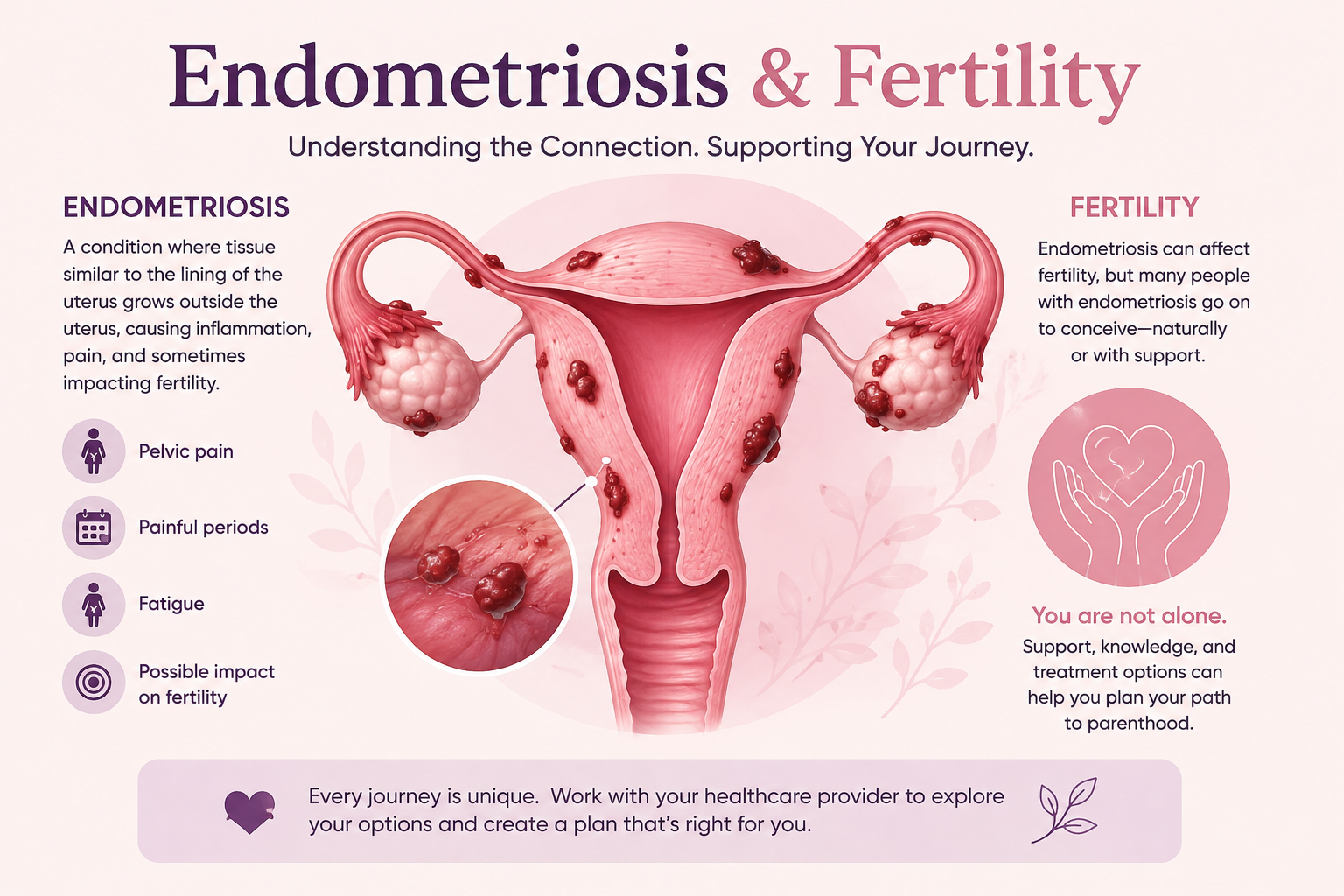
Endometriosis affects roughly 1 in 10 women of reproductive age, and it is one of the most common conditions we see behind unexplained infertility. Yet many women live with severe period pain for years believing it is "normal" — and only discover they have endometriosis when they struggle to conceive.
Here's the message we want every woman to hear first: endometriosis reduces fertility, it does not end it. With the right diagnosis and a personalised treatment plan, the majority of women with endometriosis can and do become mothers. In this guide, the specialists at Myra IVF Centre in Kenya, led by Dr. Sarita Sukhija, explain how endometriosis affects fertility, the warning signs, and every treatment path — from laparoscopy to IVF.
Quick Answer: Yes — most women with endometriosis can still get pregnant. Mild endometriosis often allows natural conception, though it may take longer. Moderate to severe endometriosis (with adhesions, blocked tubes or ovarian endometriomas) more commonly needs help: laparoscopic surgery can improve natural fertility in selected cases, IUI may suit mild disease, and IVF offers the highest success rates because it bypasses the damaged pelvic environment. Around 30–50% of women with endometriosis experience difficulty conceiving — which means half or more do not.
What Is Endometriosis?
Endometriosis is a condition in which tissue similar to the lining of the uterus (the endometrium) grows outside the uterus — most commonly on the ovaries, fallopian tubes, the ligaments supporting the uterus, and the lining of the pelvis. Like the uterine lining, this tissue responds to your monthly hormones: it thickens and bleeds with each cycle, but the blood has nowhere to go. The result is inflammation, pain, scar tissue (adhesions) and, on the ovaries, blood-filled cysts called endometriomas ("chocolate cysts").
Endometriosis is classified into four stages:
| Stage | Severity | Typical findings |
|---|---|---|
| Stage I | Minimal | A few small, superficial implants; little or no scar tissue |
| Stage II | Mild | More implants, slightly deeper, minimal adhesions |
| Stage III | Moderate | Deeper implants, small endometriomas, noticeable adhesions |
| Stage IV | Severe | Large endometriomas, dense adhesions, distorted pelvic anatomy |
Importantly, pain does not always match stage — a woman with stage I disease can have severe pain, while a woman with stage IV disease may feel nothing and discover it only during a fertility work-up.
How Does Endometriosis Affect Fertility?
Endometriosis can interfere with conception at almost every step:
- Chronic pelvic inflammation: inflammatory fluid in the pelvis can be hostile to eggs, sperm and early embryos.
- Adhesions and distorted anatomy: scar tissue can bind the ovaries and tubes, stopping the tube from picking up the egg at ovulation.
- Tubal damage: the fallopian tubes can become blocked or lose their function.
- Endometriomas: ovarian cysts that can destroy healthy ovarian tissue and lower ovarian reserve — as can the surgery to remove them (see our guide to low AMH and poor ovarian reserve).
- Egg quality and implantation: the inflammatory environment may affect egg quality, and implantation rates may be slightly lower in some women.
The overall effect: around 30–50% of women with endometriosis will experience some difficulty conceiving. That also means many conceive without any help at all — the condition exists on a wide spectrum.
Warning Signs: When Painful Periods Are Not "Normal"
See a specialist if you recognise several of these:
- Period pain severe enough to miss work, school or daily activities
- Pain during or after intercourse
- Chronic pelvic pain between periods
- Heavy or irregular menstrual bleeding
- Painful bowel movements or urination, especially during your period
- Fatigue, bloating or nausea around your period
- Trying to conceive for 6–12 months without success
And remember the silent version: infertility may be the only symptom. If you've been trying without success, endometriosis should be on the checklist even if you have no pain.
How Is Endometriosis Diagnosed?
- History and examination: a detailed menstrual and pain history is often the biggest clue.
- Transvaginal ultrasound: reliably detects endometriomas and can identify deep disease in experienced hands.
- MRI: occasionally used to map deep infiltrating endometriosis before surgery.
- Laparoscopy: the gold standard — a keyhole camera procedure that both confirms the diagnosis and allows treatment in the same operation.
- Fertility work-up alongside: AMH testing, antral follicle count and a semen analysis for your partner, so the whole picture guides the plan — not just the endometriosis. (Male factors matter too — see our guide to male infertility.)
Treatment Options: Matching the Plan to the Stage
There is no single "right" treatment — the best path depends on your age, ovarian reserve, disease stage, symptoms and how long you've been trying:
| Situation | Usual first-line approach |
|---|---|
| Young, mild disease (stage I–II), open tubes, short time trying | Timed natural trying, or IUI with ovarian stimulation |
| Significant pain, or mild-moderate disease found at diagnosis | Laparoscopic excision of lesions — can improve both pain and natural conception |
| Moderate–severe disease (stage III–IV), blocked tubes, endometriomas | IVF — bypasses the pelvic environment entirely |
| Age 35+, low AMH, or failed IUI attempts | Move to IVF promptly — time matters more than treating the endometriosis first |
| Not ready for pregnancy, but endometriomas or surgery planned | Egg freezing to protect ovarian reserve before it declines |
Surgery or IVF First? The Honest Answer
This is the decision patients ask about most, and it deserves nuance:
- Surgery first makes sense when pain is a major problem, when mild-moderate disease is found in a young woman with good reserve, or when large endometriomas would interfere with egg retrieval.
- IVF first is usually wiser when age or low AMH make time precious, when tubes are already damaged, or when previous surgery has already reduced ovarian reserve — because operating on ovaries always risks removing healthy tissue along with the cyst.
- Repeat surgery is rarely helpful for fertility — if endometriosis returns after an operation, IVF almost always beats a second surgery for achieving pregnancy.
The right answer is individual. At Myra IVF Centre we assess your AMH, scan findings, symptoms and history — and give you a clear recommendation with the reasoning, not just a menu of options.
Endometriosis Care at Myra IVF Centre, Kenya
At Myra IVF Centre, women with endometriosis receive joined-up care under one roof:
- Expert diagnosis — detailed ultrasound assessment and AMH/ovarian reserve testing at every fertility work-up.
- Advanced laparoscopic surgery when it genuinely helps, performed with ovarian-tissue-sparing technique.
- The full fertility ladder — from IUI to IVF with ICSI and blastocyst culture in our ISO 9001 certified laboratory.
- Fertility preservation — egg freezing before ovarian surgery or for women not yet ready for pregnancy.
- Three convenient locations — Nairobi, Mombasa and Kisumu.
With over 15 years of experience and a 79% overall IVF success rate, our team led by Dr. Sarita Sukhija has helped thousands of women — many with endometriosis — become mothers.
Conclusion
Endometriosis is common, real and too often dismissed — but it is not the end of your fertility story. Mild disease frequently allows natural conception; moderate and severe disease have proven, effective treatment paths through surgery, IUI and especially IVF. The keys are early diagnosis, knowing your ovarian reserve, and not losing time — because age remains the one factor no treatment can reverse.
If painful periods, pelvic pain or months of trying without success sound familiar, don't wait for it to be "bad enough." Speak with our fertility specialists at Myra IVF Centre — an assessment today gives you options tomorrow.
Book a consultation today. Contact us at +254 786656236 or drsarita2007@gmail.com.
Frequently Asked Questions
Can I get pregnant naturally with endometriosis?
Yes — many women with endometriosis conceive naturally, especially with mild (stage I–II) disease. Endometriosis reduces fertility rather than eliminating it. However, if you have been trying for 6 to 12 months without success, or you have significant pain or known moderate-to-severe endometriosis, it is worth seeing a fertility specialist early rather than waiting, because age and disease progression both work against you over time.
How does endometriosis affect fertility?
Endometriosis can affect fertility in several ways: chronic pelvic inflammation that is hostile to eggs, sperm and embryos; scar tissue (adhesions) that distorts the tubes and ovaries; blocked or damaged fallopian tubes; ovarian cysts called endometriomas that can reduce ovarian reserve; and possible effects on egg quality and embryo implantation. The impact varies enormously — some women are barely affected while others struggle significantly.
What are the signs that endometriosis may be affecting my fertility?
Warning signs include very painful periods that interfere with daily life, pain during or after intercourse, chronic pelvic pain between periods, heavy or irregular bleeding, painful bowel movements or urination during periods, and difficulty conceiving after 6 to 12 months of trying. Importantly, some women with endometriosis have no pain at all, and infertility is the first sign — so unexplained difficulty conceiving also deserves evaluation.
How is endometriosis diagnosed?
Diagnosis starts with a detailed history and pelvic examination, followed by a transvaginal ultrasound, which can detect endometriomas (chocolate cysts) and deep disease. MRI is sometimes used for complex cases. The definitive diagnosis is made by laparoscopy — a keyhole procedure in which the surgeon directly sees and can remove endometriosis tissue. Increasingly, specialists treat symptoms without requiring surgical confirmation first.
Does laparoscopy improve fertility in endometriosis?
In many cases, yes. Laparoscopic removal of endometriosis lesions and adhesions can improve natural conception rates, particularly in mild to moderate disease, and can relieve pain significantly. However, surgery on ovarian endometriomas can reduce ovarian reserve, so the decision must weigh benefits against risks — especially in women planning IVF, where surgery is not always necessary first. An experienced fertility team will personalise this decision.
Is IVF or IUI better for endometriosis?
It depends on the stage. IUI with ovarian stimulation can be reasonable for young women with mild endometriosis, open tubes and good sperm parameters. IVF is generally recommended for moderate to severe endometriosis, blocked or damaged tubes, reduced ovarian reserve, age over 35, or after failed IUI attempts — because IVF bypasses the pelvic environment where endometriosis does most of its damage. IVF success rates in endometriosis patients are generally good.
Does endometriosis reduce ovarian reserve or egg quality?
It can. Endometriomas (ovarian cysts caused by endometriosis) and surgery to remove them can both lower ovarian reserve, which is measured by AMH and antral follicle count. The inflammatory environment may also affect egg quality in some women. This is why AMH testing is essential in every endometriosis fertility work-up, and why fertility preservation should be discussed before any ovarian surgery.
Should I freeze my eggs if I have endometriosis?
Egg freezing is worth serious consideration if you have endometriomas, are scheduled for ovarian surgery, have declining AMH, or have moderate to severe endometriosis and are not ready for pregnancy yet. Freezing eggs while your ovarian reserve is still good — before disease or surgery reduces it further — protects your future options. Your specialist can advise based on your age, AMH and disease stage.
Does pregnancy cure endometriosis?
No. Pregnancy often suppresses symptoms temporarily because ovulation and periods stop, but endometriosis commonly returns after delivery and breastfeeding end. Endometriosis is a chronic condition that is managed rather than cured — through medication, surgery where appropriate, and fertility treatment when pregnancy is the goal.